



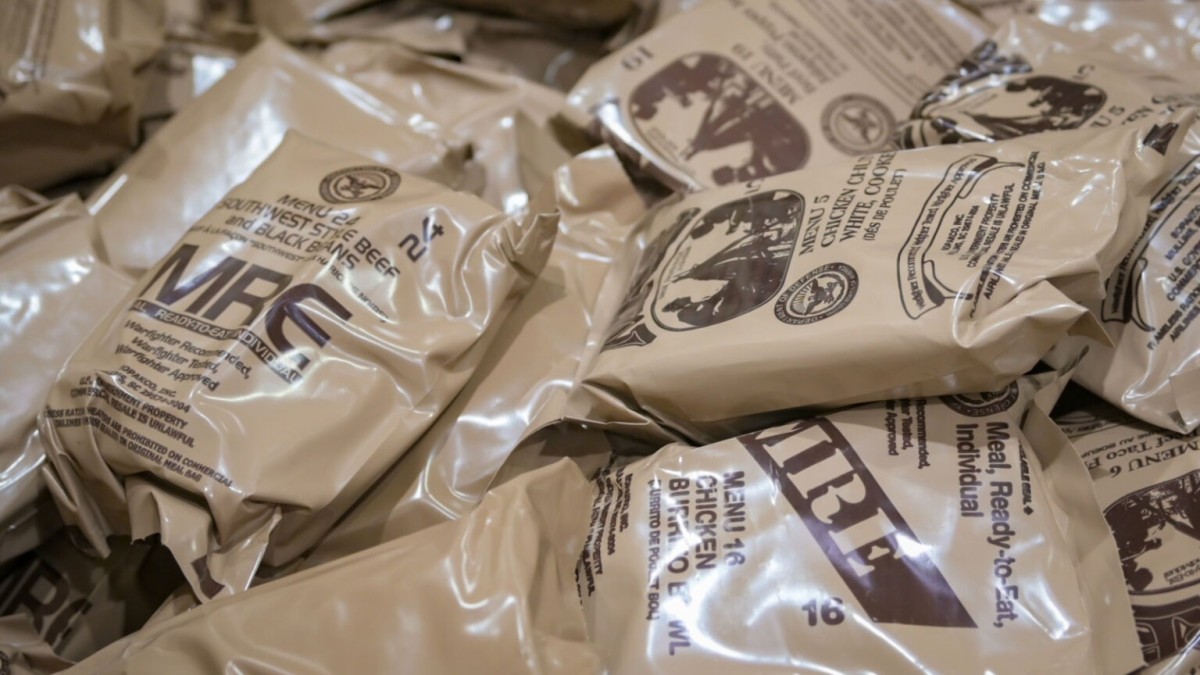
One of the most common questions people ask when comparing MREs from different years is why the menus keep changing. At first glance, these changes can appear arbitrary—one entrée disappears, another replaces it, packaging shifts, and accessory items evolve.
In reality, MRE menu changes are deliberate, data-driven decisions shaped by nutrition science, cost constraints, supply chain realities, and—perhaps most importantly—human acceptance. Meals that are nutritionally perfect but widely disliked fail their mission.
Understanding why MRE menus change over time reveals how operational food is engineered to balance biology, psychology, and logistics.
Nutrition Science Is Not Static
Nutritional guidance evolves as scientific understanding improves. Research into macronutrient balance, micronutrient deficiencies, and performance nutrition continually informs ration design.
As new data emerges, menu formulations are adjusted to better support sustained energy, recovery, and overall health under demanding conditions. This is why older MRE menus often differ significantly in fat content, fiber levels, or fortification compared to modern versions.
Field Feedback Drives Menu Decisions
Military MRE menus are not designed in isolation. Service members regularly provide feedback through surveys, field testing, and controlled acceptance studies. Meals that are consistently rejected, traded away, or discarded—even if nutritionally sound—are candidates for replacement. Acceptance matters because uneaten food provides no nutrition.
Cost and Contracting Constraints
MRE production occurs under government contracts with strict cost controls. Ingredient prices fluctuate, suppliers change, and manufacturing efficiencies evolve. When costs rise or ingredients become difficult to source at scale, menu adjustments may be required to maintain affordability without compromising safety or shelf life. Menu evolution is often a response to economic reality as much as nutritional optimization.
Shelf Stability and Performance Testing
Not all foods perform equally under long-term storage and retort processing. Some recipes degrade in texture, flavor, or appearance faster than others. Menus are refined based on shelf-life testing to ensure acceptable quality over extended storage periods. Items that fail to maintain quality may be reformulated or removed entirely.
Cultural and Dietary Considerations
As military demographics evolve, menu variety becomes increasingly important. Offering a broader range of flavors helps reduce menu fatigue and improves morale. Modern menus reflect greater attention to cultural preferences, dietary restrictions, and variety within logistical constraints.
Why Menu Fatigue Matters
Repeated exposure to the same meals can reduce appetite and caloric intake, even when food is available. Menu changes help mitigate fatigue by introducing novelty, improving acceptance during prolonged use. This psychological component is just as important as nutritional adequacy.
Civilian MREs Follow Similar Principles
Civilian MRE manufacturers face many of the same challenges—balancing nutrition, cost, shelf life, and consumer acceptance. However, civilian suppliers often have greater flexibility to adjust menus based on direct customer feedback.
Preparedness-focused brands such as Meal Kit Supply update menus to reflect consumer preferences while maintaining long shelf life and emergency readiness.
Menu Change Is a Feature, Not a Flaw
Changing MRE menus is not evidence of instability. It is evidence of a system that adapts to science, feedback, and operational reality. The goal is not to create a perfect meal, but a reliable one that people will actually eat when it matters most.
Sources & References
- U.S. Army Natick Soldier Systems Center – Operational Ration Menu Development
https://apps.dtic.mil/sti/pdfs/ADA327041.pdf
- Defense Logistics Agency – Subsistence Contracting and Food Services
https://www.dla.mil/TroopSupport/Subsistence/FoodService/
- U.S. Army Research Institute of Environmental Medicine – Soldier Nutrition Research
https://usariem.health.mil/index.cfm/research/nutrition
- Institute of Food Technologists – Consumer Acceptance of Shelf-Stable Meals
https://www.ift.org/news-and-publications/food-technology-magazine/issues/2020/november/features/consumer-acceptance
- Congressional Research Service – Defense Contracting and Cost Controls
https://crsreports.congress.gov/product/pdf/R/R43074