



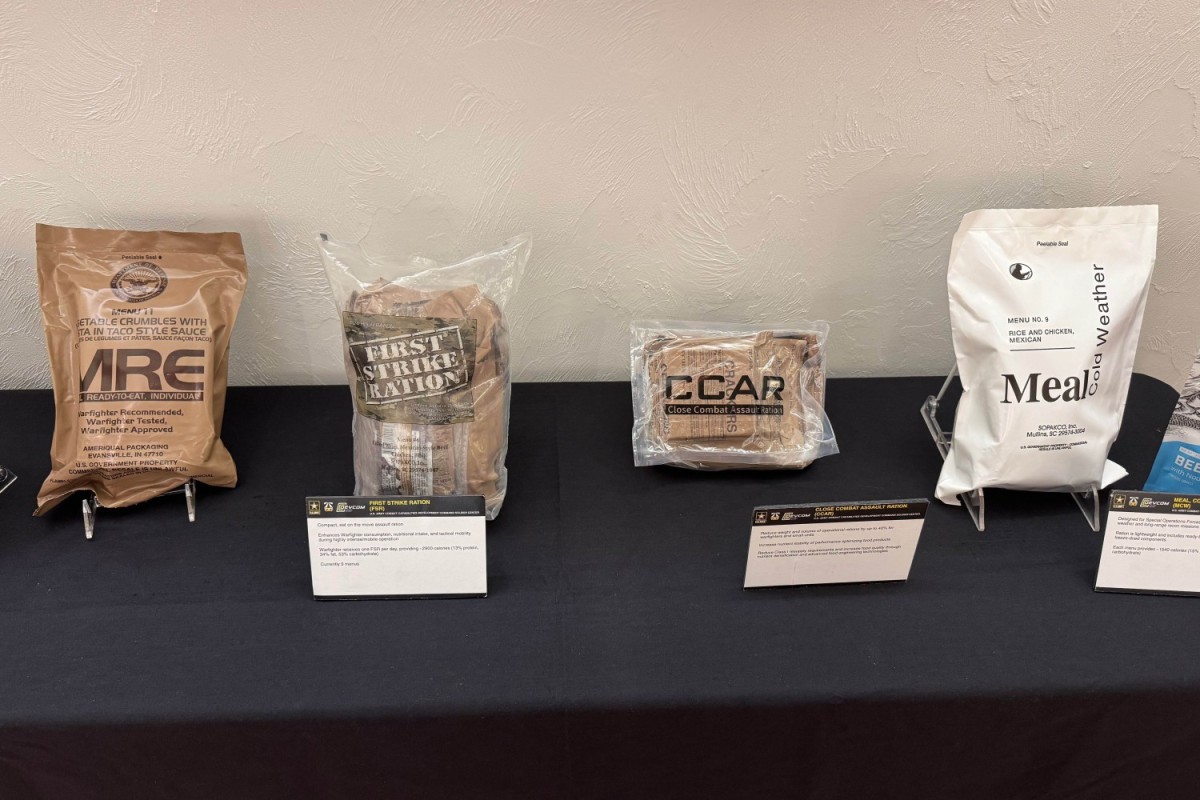
One of the most persistent myths surrounding Meals, Ready-to-Eat is the idea that they last a fixed number of years regardless of how they are stored. In reality, MRE shelf life is not governed by a calendar date. It is governed by conditions.
Military and civilian MREs are engineered to be shelf-stable, but that stability is conditional. Temperature, time, and storage environment interact in predictable ways that determine whether a meal remains safe, palatable, and nutritionally viable.
Understanding these factors is essential for anyone relying on MREs for emergency preparedness or long-term storage.
Why MREs Do Not Use Traditional Expiration Dates
Unlike consumer packaged foods, military MREs do not carry standard expiration dates. Instead, they rely on inspection-based shelf-life management.
This approach recognizes that food degradation is not linear. A meal stored under ideal conditions may remain usable far longer than one exposed to heat, even if both were produced at the same time.
Civilian MREs often include best-by guidance, but the same underlying principle applies: storage conditions matter more than age alone.
Temperature Is the Dominant Variable
Of all factors affecting MRE shelf life, temperature is the most important. Heat accelerates chemical reactions that degrade flavor, texture, and nutritional quality.
Military testing has consistently shown that MREs stored at higher temperatures lose quality dramatically faster than those stored in cool environments.
A commonly cited rule of thumb is that every 18°F (10°C) increase in storage temperature roughly halves shelf life.
Time Amplifies Storage Conditions
Time itself is not inherently destructive. Instead, it amplifies whatever conditions are present.
An MRE stored at stable, cool temperatures may remain acceptable for many years. The same meal stored in a hot garage or vehicle can deteriorate rapidly, even if packaging remains intact.
This is why identical meals can perform very differently in real-world storage scenarios.
Packaging Integrity and Environmental Exposure
Modern MREs rely on retort pouch packaging that blocks oxygen, moisture, and light. As long as this barrier remains intact, food safety is preserved.
However, punctures, seal failures, or prolonged exposure to extreme conditions can compromise the pouch. Once the barrier is breached, the meal is no longer safe regardless of age.
Inspection Indicators Used by the Military
Military inspection programs evaluate both objective and subjective indicators, including:
- Package swelling or leakage
- Off-odors upon opening
- Texture breakdown or separation
- Storage history and temperature exposure
Meals that fail inspection are removed from inventory even if they are relatively young.
How Civilian Users Should Store MREs
For civilians, best practices mirror military guidance:
- Store MREs in cool, dry environments
- Avoid prolonged exposure to heat
- Protect cases from physical damage
- Rotate stock periodically
Basements, interior closets, and climate-controlled storage areas consistently outperform garages and vehicles.
Why Shelf Life Is a Preparedness Issue
In an emergency, food that is technically edible but unpalatable may still go uneaten. Shelf life is therefore not just a safety concern—it is a usability concern.
Preparedness planning must account for both safety and acceptability under stress.
Civilian MREs and Shelf-Life Transparency
Civilian MRE suppliers often provide clearer storage guidance and shelf-life expectations than military packaging allows.
Preparedness-focused suppliers such as Meal Kit Supply design civilian MREs with long-term storage in mind, emphasizing temperature guidance and consumer clarity.
Why Storage Discipline Matters
MRE shelf life is predictable when storage discipline is applied. Heat shortens life. Cool extends it. Packaging protects until it doesn’t.
Understanding these relationships turns shelf life from a mystery into a manageable variable.
Sources & References
- U.S. Army Natick Soldier Systems Center – Shelf-Life Testing of Operational Rations
https://apps.dtic.mil/sti/pdfs/ADA283035.pdf
- Defense Logistics Agency – Shelf-Life Management Program
https://www.dla.mil/HQ/InformationOperations/LogisticsInformationServices/ShelfLife/
- Institute of Food Technologists – Temperature Effects on Shelf-Stable Foods
https://www.ift.org/news-and-publications/food-technology-magazine/issues/2018/april/features/food-shelf-life
- FDA – Food Storage and Handling Guidelines
https://www.fda.gov/food/buy-store-serve-safe-food
- U.S. Army Public Health Center – Field Ration Safety
https://phc.amedd.army.mil/topics/foodwater/Pages/default.aspx