



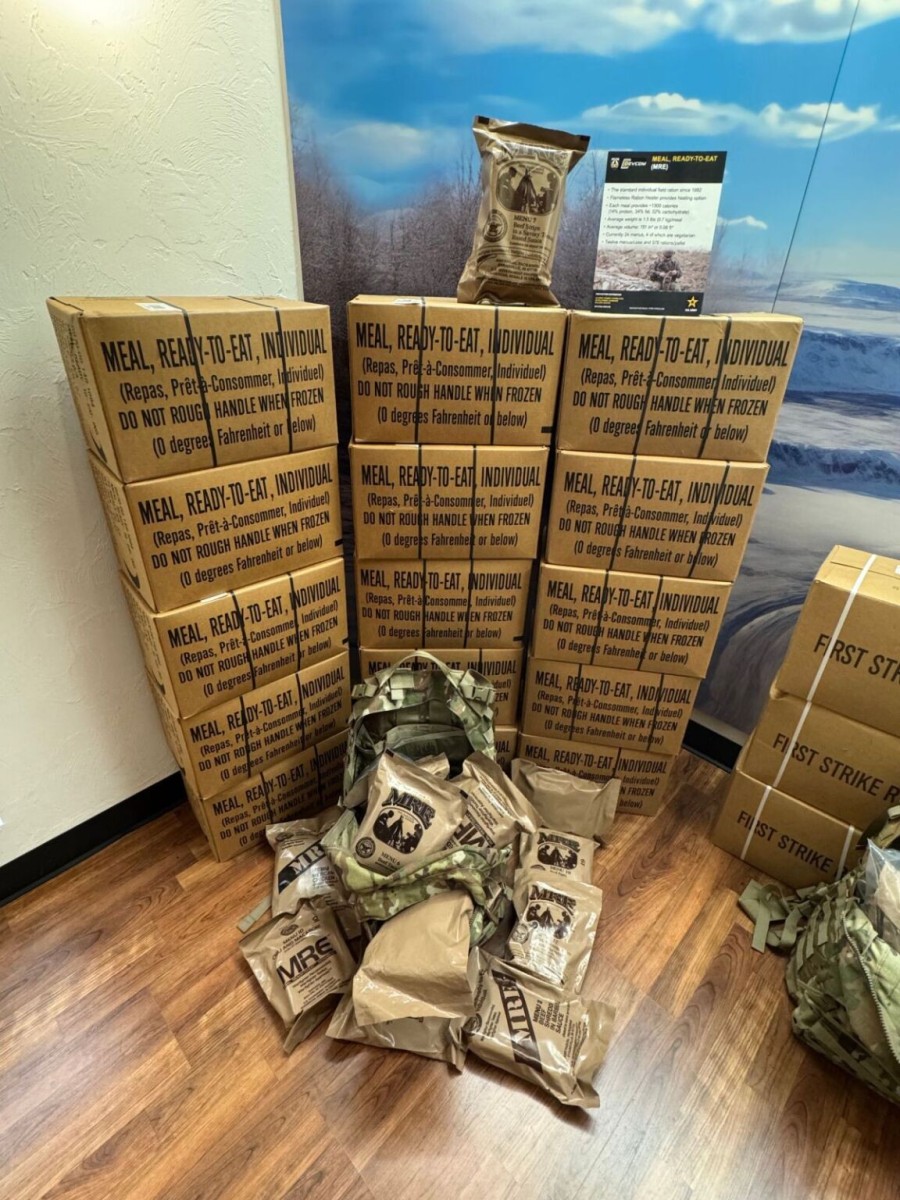
Meals, Ready-to-Eat are often described as “all-weather food,” but that description hides important nuance. While MREs are engineered to function across a wide range of climates, temperature extremes still influence how they perform, how long they last, and how they are best used. Understanding how cold and heat affect MREs helps explain design choices, storage guidance, and why performance expectations must change with climate.
Heat: The Primary Enemy of Shelf Life
High temperatures accelerate chemical reactions that degrade food quality. In hot environments, MREs lose flavor, texture, and nutritional value more quickly—even when packaging remains intact. Extended exposure to heat shortens shelf life dramatically. This is why military storage guidance emphasizes keeping MREs as cool as possible whenever feasible.
Cold Temperatures and Food Quality
Cold environments slow degradation and extend shelf life. However, cold introduces other challenges. In freezing conditions, MRE components may become stiff or difficult to open. Some textures change temporarily until warmed. Importantly, freezing does not make MREs unsafe. Once thawed, properly sealed meals remain safe to eat.
Performance of Flameless Heaters in Cold Weather
Flameless ration heaters rely on chemical reactions that slow in cold temperatures. In very cold environments, heaters may produce less heat or require additional water and insulation to function effectively. This limitation reinforces why MREs are designed to be edible without heating.
Hydration Demands in Hot vs Cold Climates
Hot climates increase fluid loss through sweat, raising hydration requirements when consuming MREs. Cold climates can suppress thirst, increasing the risk of dehydration even when water is available. MRE design accounts for these risks, but users must adapt behavior to climate conditions.
Packaging Performance Across Climates
Retort pouches are designed to withstand temperature extremes without cracking or delaminating. However, repeated freeze-thaw cycles or prolonged heat exposure increase the risk of packaging stress. Careful handling preserves integrity across climates.
Why Climate Awareness Matters for Preparedness
Civilians often store MREs in garages, vehicles, or sheds where temperatures fluctuate dramatically. These environments can shorten shelf life far faster than indoor storage. Preparedness planning must consider local climate realities.
Adapting Use to Conditions
MREs are flexible tools, but optimal use requires adjustment:
- Rotate stock more frequently in hot climates
- Insulate meals and heaters in cold environments
- Adjust hydration strategies based on temperature
Civilian MREs and Climate Guidance
Civilian preparedness suppliers often provide clearer storage recommendations tailored to household environments. Suppliers such as Meal Kit Supply emphasize climate-aware storage guidance to help consumers preserve shelf life and performance.
Climate Does Not Make MREs Fail—Misuse Does
MREs are engineered to tolerate harsh environments, but they are not immune to physics. Understanding climate effects allows users to deploy them intelligently rather than expecting uniform performance everywhere.
Sources & References
- U.S. Army Natick Soldier Systems Center – Environmental Effects on Operational Rations
https://apps.dtic.mil/sti/pdfs/ADA283035.pdf
- Defense Logistics Agency – Shelf-Life Extension and Temperature Effects
https://www.dla.mil/InformationOperations/LogisticsInformationServices/ShelfLife/
- U.S. Army Public Health Center – Cold and Heat Injury Prevention
https://phc.amedd.army.mil/topics/discond/hipss/Pages/default.aspx
- Institute of Food Technologists – Temperature Effects on Shelf-Stable Foods
https://www.ift.org/news-and-publications/food-technology-magazine/issues/2018/april/features/food-shelf-life
- FAO – Food Storage in Emergency Conditions
https://www.fao.org/3/i3433e/i3433e.pdf