



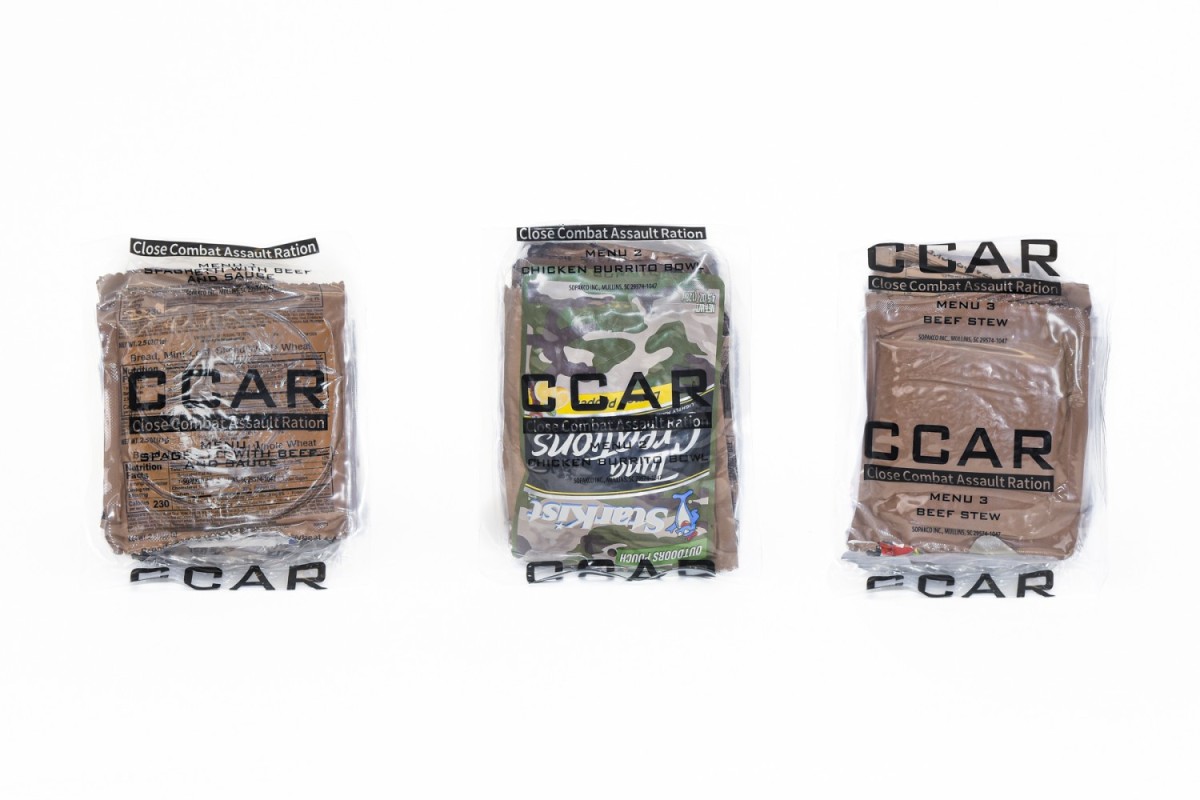
One of the most common misconceptions about Meals, Ready-to-Eat is that a single meal—or even a single case—is sufficient for long-term sustenance. This misunderstanding often stems from focusing on calories alone rather than how calories interact with activity level, stress, environment, and duration.
MREs are engineered around specific assumptions about physical exertion and operational demand. When those assumptions change, the number of meals required per person per day changes with them. Understanding how many MREs a person actually needs requires moving beyond simple calorie counts and into real-world usage scenarios.
What a “Standard” MRE Is Designed to Support
A single military MRE typically provides roughly 1,200 to 1,300 calories. This number is not arbitrary. It reflects an assumption of sustained physical activity rather than sedentary living. Military ration planning traditionally assumes three MREs per day during high-demand operations, yielding approximately 3,600 calories. This level of intake supports prolonged exertion, not comfort.
Calories Are Context-Dependent
Calories do not function in a vacuum. The number of calories required depends on:
- Physical activity level
- Environmental temperature
- Stress and sleep deprivation
- Body size and metabolism
During physically demanding conditions, caloric needs increase substantially. In sedentary or shelter-in-place scenarios, needs decrease.
Why One MRE Per Day Is Not Enough
Consuming a single MRE per day provides insufficient energy for most adults, even under low-activity conditions. While short-term calorie restriction is survivable, prolonged underfeeding leads to fatigue, impaired cognition, and weakened immune function. Preparedness planning must account for sustained intake, not minimum survival.
Two MREs vs Three MREs Per Day
Two MREs per day may be adequate for:
- Low-activity shelter scenarios
- Short-duration emergencies
- Supplemented diets with additional food sources
Three MREs per day are more appropriate for:
- Manual labor or evacuation scenarios
- Cold environments
- Extended emergency response efforts
The correct number depends on how the meals are used.
Macronutrients Matter as Much as Calories
MREs are formulated to balance carbohydrates, fats, and proteins for sustained energy. Relying on calorie-dense but nutritionally imbalanced food can result in energy crashes, digestive discomfort, and poor morale. Meal composition affects how calories are utilized.
Civilian Preparedness Planning
Civilians planning emergency food storage often overestimate how long a small number of meals will last. A realistic baseline for preparedness is:
- 2–3 MREs per person per day
- Adjusted for activity and duration
- Supplemented with water and other food sources
Why Variety and Rotation Matter
Consuming the same meals repeatedly reduces appetite and intake over time. Menu variety supports consistent caloric consumption during prolonged emergencies.
Civilian MREs and Calorie Transparency
Civilian MRE suppliers typically provide clearer nutrition labeling and usage guidance than military packaging. Preparedness-focused suppliers such as Meal Kit Supply offer civilian MREs with transparent calorie information to help households plan realistically.
Calories Are a Planning Tool, Not a Guarantee
Calorie counts are only meaningful when paired with context. Preparedness is not about eating as little as possible—it is about sustaining function when normal food systems fail.
Sources & References
- U.S. Army Research Institute of Environmental Medicine – Energy Requirements During Operations
https://apps.dtic.mil/sti/pdfs/ADA463553.pdf
- Institute of Medicine – Dietary Reference Intakes for Energy
https://nap.nationalacademies.org/catalog/10490/dietary-reference-intakes-for-energy-carbohydrate-fiber-fat-fatty-acids-cholesterol-protein-and-amino-acids
- U.S. Army Public Health Center – Nutrition and Performance
https://phc.amedd.army.mil/topics/healthyliving/nutrition/Pages/default.aspx
- CDC – Nutrition, Energy Balance, and Physical Activity
https://www.cdc.gov/nutrition/index.html
- Food and Agriculture Organization – Human Energy Requirements
https://www.fao.org/3/y5686e/y5686e.pdf