



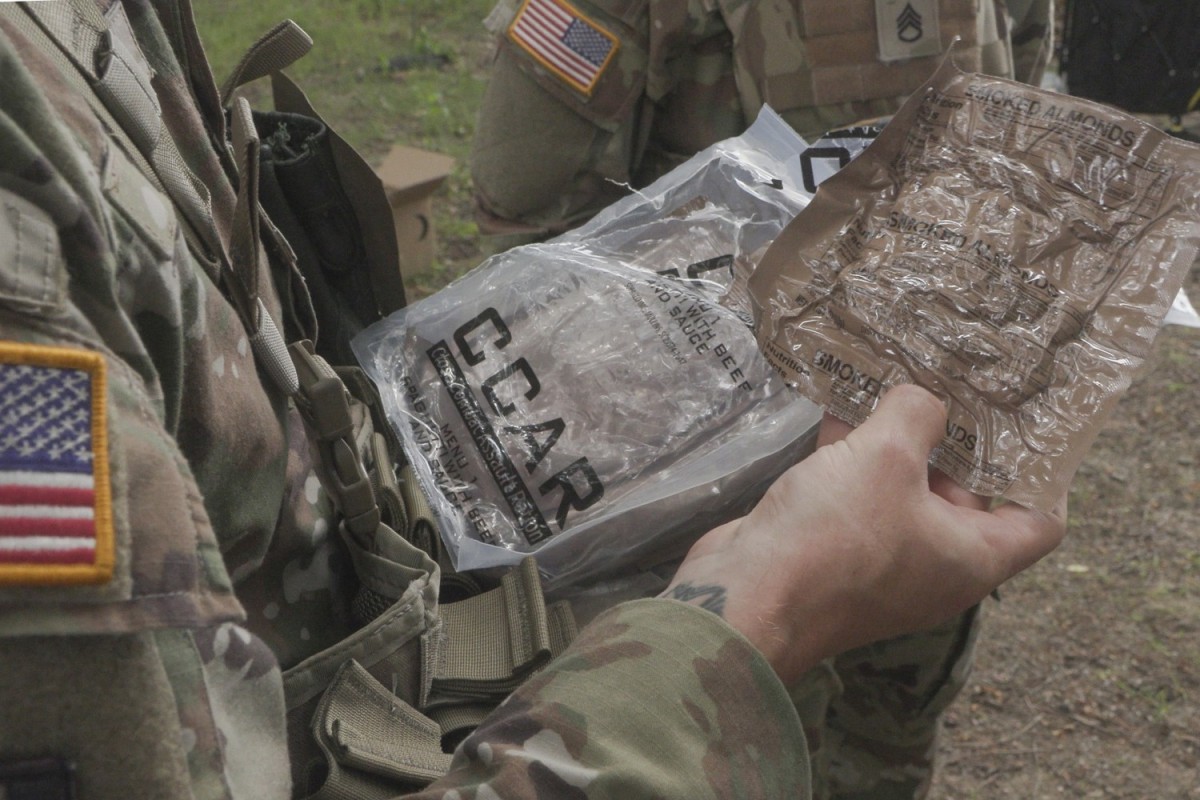
In the aftermath of major disasters, images of Meals, Ready-to-Eat being distributed to affected populations are widely circulated. Pallets of boxed meals, responders eating from brown pouches, and volunteers handing out food create a powerful impression that military MREs flow freely into civilian hands during emergencies.
What is far less visible is what happens after those operations end. Once the cameras leave and the immediate crisis subsides, unused MREs do not simply disappear, get donated en masse, or drift into civilian markets. Instead, they re-enter a highly structured recovery process governed by federal accountability, food safety, and readiness requirements.
Understanding what actually happens to unused MREs after disaster relief operations requires examining how emergency deployment fits into a much larger logistics and preparedness framework.
Emergency Deployment Does Not Transfer Ownership
When MREs are deployed for disaster relief, they are issued under emergency logistics authority. This authority allows rapid movement and distribution, but it does not change ownership.
Military MREs remain government property whether they are distributed directly by the Department of Defense, through the National Guard, or via civilian agencies operating under federal coordination such as FEMA.
Custody may be shared temporarily to facilitate distribution, but legal ownership remains with the federal government at all times.
Accountability Persists Even During Crisis
Disaster environments are chaotic, but logistics systems are designed to operate under those conditions. MRE deployment during relief efforts is tracked at the case level.
Agencies document:
- The number of cases deployed to a region
- The number of cases issued to responders or civilians
- The number of cases remaining unopened at the end of operations
This tracking serves two purposes. First, it ensures that food supply is sufficient during the emergency. Second, it prevents unauthorized diversion once the response phase concludes.
Lost or unaccounted inventory is investigated, not written off.
The Post-Response Recovery Phase
When disaster response transitions into recovery, unused MREs become part of a formal reclamation process. Meals that were staged but never issued are collected and returned to controlled storage locations.
This recovery phase often occurs quietly and receives little public attention. It involves coordination between federal logistics personnel, warehouse operators, inspectors, and transportation units.
The objective is not to reuse meals indiscriminately, but to preserve readiness without compromising safety.
Inspection and Requalification of Unused Meals
Recovered MREs are not automatically returned to inventory. Each batch is evaluated to determine whether it remains suitable for future use.
Inspection focuses on:
- Packaging integrity and seal condition
- Evidence of heat exposure during deployment
- Signs of moisture intrusion or improper storage
- Compliance with inspection and shelf-life criteria
Meals that pass inspection may be reabsorbed into inventory for future disaster response, training, or contingency operations. Meals that fail inspection are removed from circulation.
Why Donation Is the Exception, Not the Rule
Public donation of unused military MREs is often assumed to be the natural outcome of relief operations. In practice, donation is rare and highly restricted.
Once meals leave controlled custody, the government loses the ability to verify downstream handling, storage conditions, and consumption safety. This introduces food safety liability and undermines confidence in emergency feeding systems.
Additionally, donated meals reduce future response capacity. What appears excess after one disaster may be essential during the next.
Why Unused MREs Are Not Sold as Surplus
Military MREs are not classified as surplus simply because they were not used. As long as they meet inspection standards, they remain part of readiness planning.
Selling unused meals would weaken the closed-loop accountability system that allows rapid redeployment during future emergencies.
The Civilian Preparedness Supply Chain Exists for a Reason
The restrictions surrounding military MREs are not a failure of generosity. They are a deliberate design choice to preserve readiness, accountability, and public safety.
Civilian emergency preparedness relies on a separate commercial supply chain built specifically to serve households, organizations, and communities without drawing from government stockpiles.
Suppliers such as Meal Kit Supply provide civilian-produced MRE-style meals that deliver long shelf life, portability, and minimal preparation while remaining lawful for private ownership.
Why This Matters
Misunderstanding what happens to unused MREs fuels myths about surplus availability and encourages improper resale.
In reality, the recovery and control of unused meals is a cornerstone of disaster preparedness. Unused MREs are not leftovers — they are deferred readiness.
Sources & References
- FEMA – Logistics Management Directorate
https://www.fema.gov/about/logistics-management-directorate
- U.S. Government Accountability Office – Federal Disaster Response Logistics
https://www.gao.gov/products/gao-20-94
- Defense Logistics Agency – Troop Support Subsistence Operations
https://www.dla.mil/TroopSupport/Subsistence/
- Department of Defense – Property Accountability Policies
https://www.esd.whs.mil/Directives/
- U.S. Army Natick Soldier Systems Center – Operational Rations Overview
https://www.natick.army.mil/Products/Operational-Rations/