



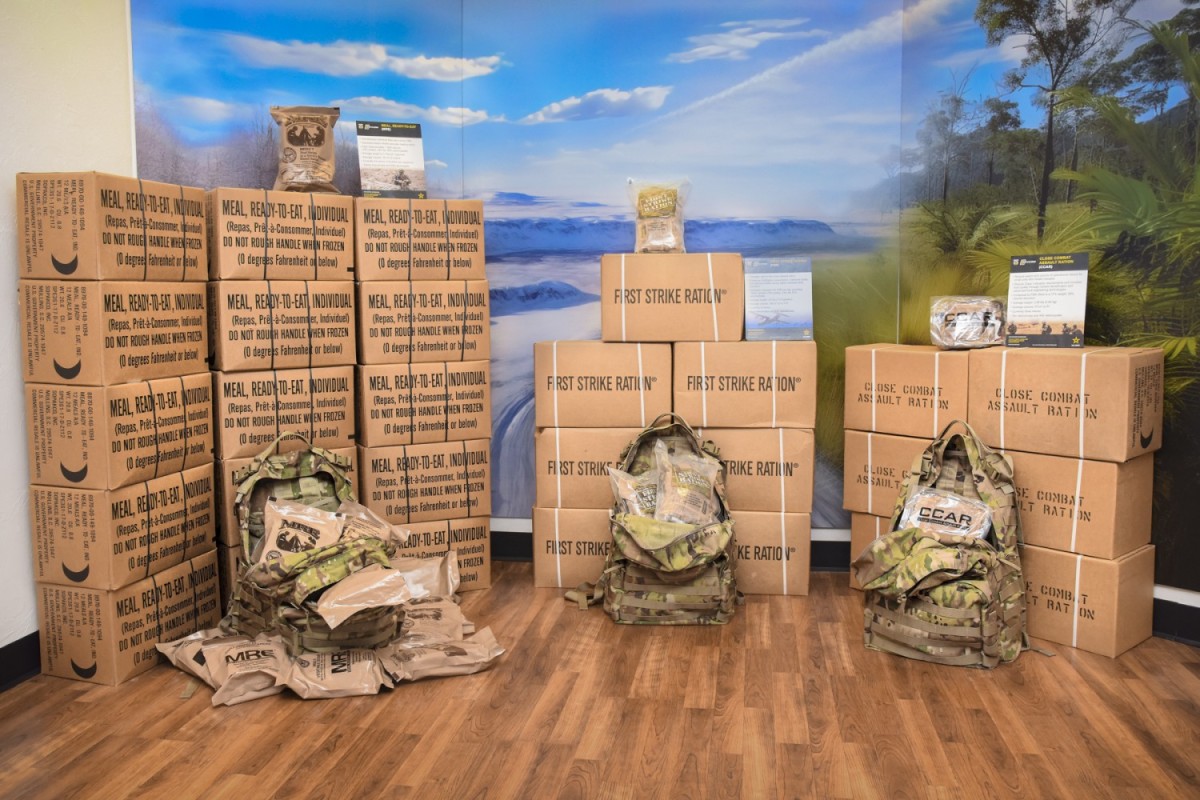
The term “MRE” is often used as if it describes a single, uniform product. In practice, it refers to two fundamentally different categories of food that share a name but diverge in purpose, design constraints, and legal treatment.
Military Meals, Ready-to-Eat and civilian-produced MREs may look similar at a glance, but they are built to solve different problems for different users under different rules. Confusing the two leads to misunderstandings about legality, nutrition, and suitability for civilian preparedness.
Understanding the differences between military and civilian MREs requires examining why each exists, how each is designed, and what obligations govern their use.
Different Missions Drive Different Designs
Military MREs are designed to support sustained operations in environments where conventional food service is unavailable or impractical. They must function during combat, training exercises, and disaster response under conditions that assume high physical exertion and logistical uncertainty.
Civilian MREs, by contrast, are designed for preparedness, evacuation, outdoor work, and emergency response outside of military command structures. Their mission is resilience at the household or organizational level, not battlefield endurance.
This difference in mission shapes every design decision that follows.
Nutritional Philosophy and Energy Requirements
Military MREs are engineered to deliver high caloric density to sustain individuals engaged in prolonged physical activity. Calorie targets are set to support energy expenditure well above civilian daily norms.
Civilian MREs typically offer a broader range of calorie profiles. Some mirror military energy density for emergency use, while others prioritize balance, digestibility, and flexibility for less physically demanding scenarios.
Neither approach is inherently superior; each reflects its intended use.
Packaging Priorities and Usability
Both military and civilian MREs rely on retort pouch technology for shelf stability. However, military packaging prioritizes durability, standardization, and compatibility with logistics systems over consumer convenience.
Civilian MRE packaging places greater emphasis on:
- Clear nutrition and ingredient labeling
- User-friendly opening and preparation
- Transparency around shelf life and storage
These differences reflect the expectations of civilian users who must make informed decisions without institutional guidance.
Accessory Components and Flexibility
Military MREs include standardized accessory items—utensils, condiments, beverages—designed to meet operational requirements across large populations.
Civilian MREs often vary accessories to accommodate dietary preferences, regional tastes, and consumer feedback. This flexibility improves acceptance during prolonged civilian use.
The Legal Distinction That Matters Most
The most significant difference between military and civilian MREs is legal ownership.
Military MREs remain government property until consumed or destroyed. Issuance does not transfer ownership, and resale or redistribution outside authorized channels is unlawful.
Civilian MREs are commercial goods. Ownership transfers at purchase, and the meals can be legally stored, resold, or donated in accordance with consumer food laws.
Why Confusion Persists
Visual similarity, shared terminology, and online misinformation blur the line between military and civilian MREs. This confusion has fueled improper resale of military meals and unrealistic expectations about their availability.
Understanding the distinction helps consumers avoid legal ambiguity and select food appropriate for their needs.
Preparedness Without Dependence on Military Supply
Effective civilian preparedness does not require access to military property. It requires food designed explicitly for civilian ownership and long-term storage.
Suppliers such as Meal Kit Supply produce civilian MREs that incorporate durability and shelf stability inspired by military rations, while remaining fully compliant with consumer food regulations.
Why the Distinction Exists for a Reason
The separation between military and civilian MREs protects both systems. It preserves military readiness while allowing civilians to prepare responsibly within lawful supply chains.
Recognizing that distinction is key to informed preparedness planning.
Sources & References
- U.S. Army Natick Soldier Systems Center – Operational Rations: Purpose and Design
https://www.natick.army.mil/About/History/
- Defense Standardization Program Office – Food and Rations Standards
https://www.dsp.dla.mil/Programs/Food-and-Rations/
- U.S. Food and Drug Administration – Shelf-Stable and Low-Acid Foods
https://www.fda.gov/food/acidified-low-acid-canned-foods
- Congressional Research Service – Defense Logistics and Sustainment
https://crsreports.congress.gov/product/pdf/R/R44329
- Institute of Food Technologists – Retort Processing and Shelf-Stable Meals
https://www.ift.org/news-and-publications/food-technology-magazine/issues/2017/june/features/retort-processing