



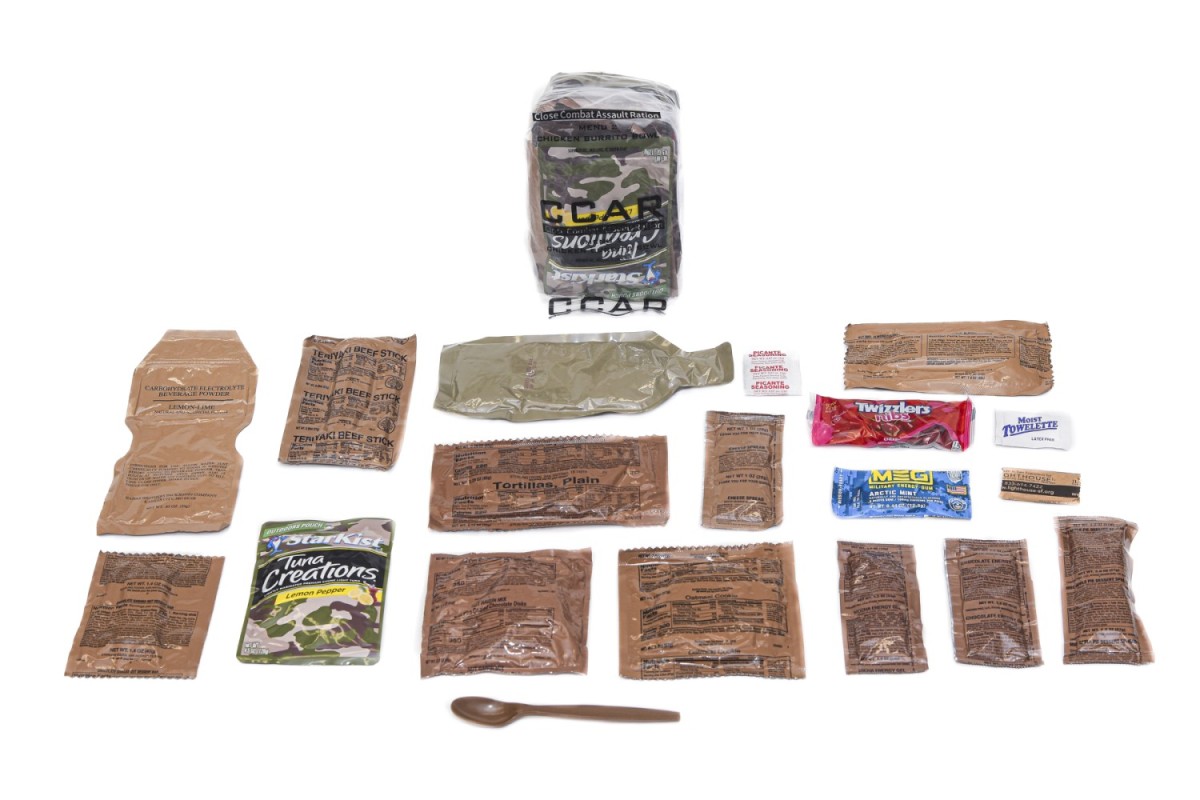
When people encounter U.S. military Meals, Ready-to-Eat outside of official contexts, the natural assumption is that these meals behave like any other packaged food product. They imagine warehouses full of excess meals, quietly aging until someone decides to sell them off as surplus. This assumption fundamentally misunderstands how military food logistics work.
At the center of this misunderstanding is a lack of awareness about the Defense Logistics Agency (DLA) and its role in controlling every stage of MRE procurement, storage, movement, and accountability. MREs are not simply food. They are planned nutritional assets tied directly to national readiness.
Understanding DLA’s control over MREs explains why these meals are tightly regulated, why they rarely leave government custody, and why civilian access is intentionally routed through entirely separate commercial systems.
The Defense Logistics Agency’s Mission
The Defense Logistics Agency is responsible for supplying the U.S. military with nearly all consumable goods required to operate: fuel, medical supplies, clothing, spare parts, and food. MREs fall squarely within this mission because they enable operations when traditional food service is unavailable or impossible.
DLA’s mandate is not efficiency in the commercial sense. It is continuity under failure. Every system it manages is designed to function during war, natural disasters, infrastructure collapse, and global instability.
Because of this, MREs are treated less like groceries and more like fuel reserves: planned, monitored, and protected.
Procurement Based on Readiness Modeling
Unlike commercial food companies that produce based on consumer demand signals, MRE procurement begins with readiness modeling. DLA works with military planners to forecast nutritional needs years in advance.
These forecasts account for:
- Training cycles across all branches
- Projected troop strength
- Contingency operations
- Humanitarian and disaster response scenarios
This modeling intentionally over-prepares. The system is designed to absorb shocks, not react to them.
As a result, MREs may be produced long before they are ever needed, then held in controlled storage as strategic reserves rather than “extra” inventory.
Manufacturing Contracts and Oversight
MRE manufacturers do not operate freely in the marketplace. They operate under strict government contracts that define nearly every aspect of production.
These contracts specify:
- Exact caloric targets and nutritional balance
- Packaging performance under extreme conditions
- Shelf-life expectations at various temperatures
- Quality assurance and inspection procedures
Production runs are audited, tested, and documented. Meals that fail inspection do not quietly move downstream; they are rejected, destroyed, or reworked under supervision.
This level of oversight ensures consistency but also reinforces a critical point: these meals are not intended to enter commercial circulation.
Inventory Tracking and Accountability
Once produced, MREs are tracked at the case level using National Stock Numbers and contract identifiers. While individual meal pouches are not serialized, case-level tracking provides sufficient resolution for accountability.
DLA maintains visibility across:
- Warehouse locations
- Stockpile volumes
- Deployment movements
- Recovery and inspection outcomes
This tracking exists to prevent loss, diversion, and misuse. Missing inventory is not written off casually; it is investigated.
Pre-Positioning and Rapid Deployment
One of DLA’s most critical functions is pre-positioning MRE stockpiles. Meals are strategically stored to enable rapid deployment during emergencies.
This pre-positioning allows MREs to reach disaster zones within hours, not days, without relying on fragile commercial supply chains.
Importantly, meals do not lose their government property status when deployed. Even when distributed through civilian agencies, they remain under federal control.
Recovery, Inspection, and Reabsorption
When operations conclude, unused meals are recovered whenever possible. They are inspected for damage, heat exposure, and storage conditions.
Meals that pass inspection re-enter inventory. Meals that fail are destroyed under controlled procedures.
This closed-loop system explains why unused MREs do not flow into surplus markets. There is no operational incentive to release them, and significant risk in doing so.
Why Civilian Access Uses a Separate System
The military food supply exists to preserve readiness, not to serve civilian demand. Allowing government-controlled meals into public commerce would undermine accountability, introduce liability, and complicate future response planning.
For this reason, civilian preparedness relies on entirely separate commercial supply chains. Civilian MREs are produced under consumer food regulations, labeled transparently, and sold through lawful channels.
Suppliers such as Meal Kit Supply apply many of the same durability and shelf-life principles used in military rations, but within a framework designed for private ownership and long-term household preparedness.
Why This Distinction Matters
Understanding DLA’s role clarifies why genuine military MREs are tightly controlled and why their appearance in civilian markets often signals improper diversion.
More importantly, it highlights that civilian preparedness does not require military property. It requires food designed from the outset to be owned, stored, and relied upon by the public.
Sources & References
- Defense Logistics Agency – Troop Support (Subsistence Supply Chain)
https://www.dla.mil/TroopSupport/Subsistence/
- Defense Logistics Agency – Strategic Plan
https://www.dla.mil/AboutDLA/Strategic-Plan/
- U.S. Government Accountability Office – Defense Inventory Management
https://www.gao.gov/products/gao-21-439
- U.S. Army Natick Soldier Systems Center – Operational Rations Program
https://www.natick.army.mil/Products/Operational-Rations/
- FEMA – Logistics Management Directorate
https://www.fema.gov/about/logistics-management-directorate