Category Archives: News

This is the news category for the site

Flameless Ration Heaters Explained: How MREs Are Heated Without Fire

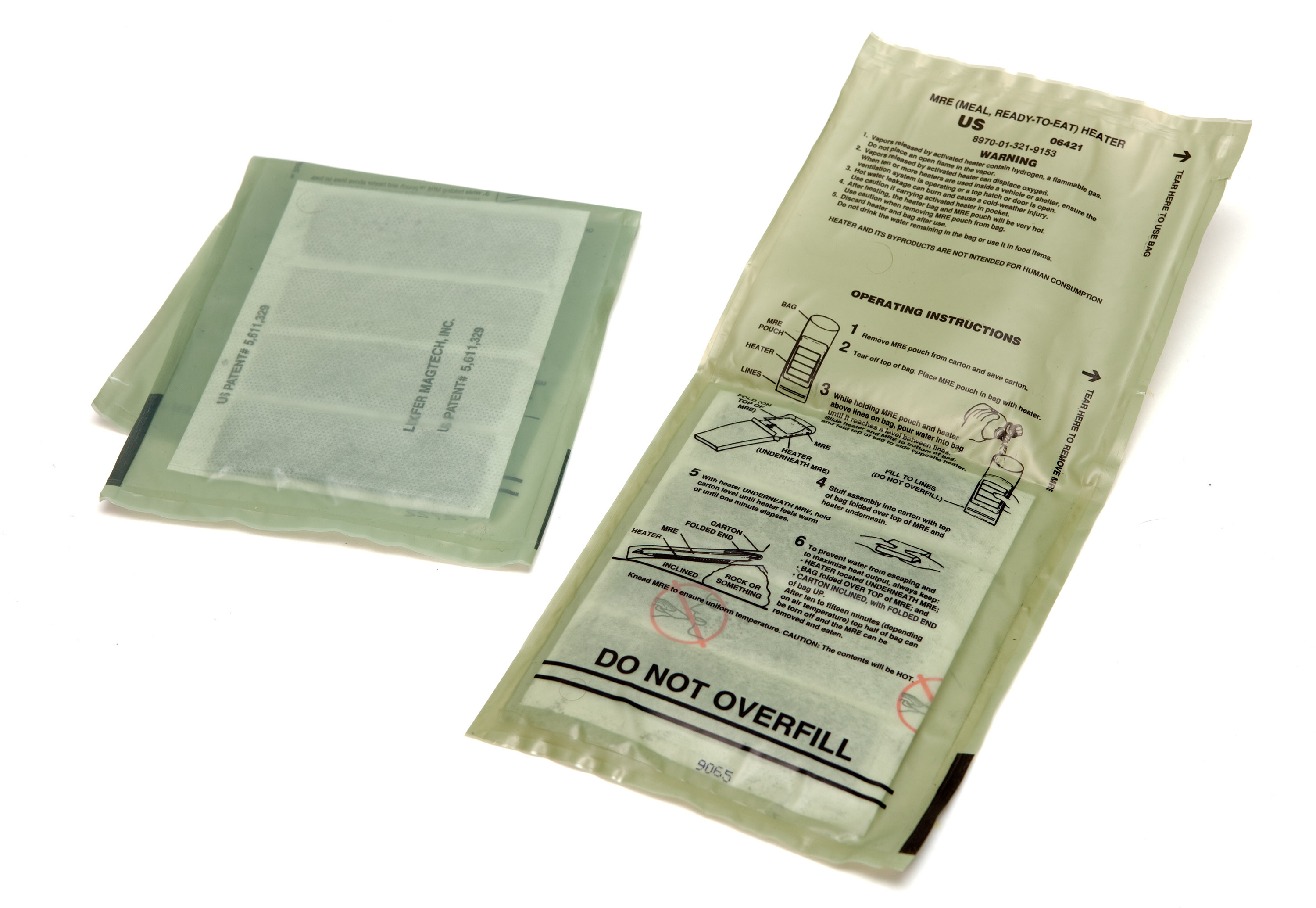
Photo Credit: Ashley Pomeroy

One of the most distinctive components of a Meal, Ready-to-Eat is the flameless ration heater. Often treated as a novelty, the heater is in fact a carefully engineered solution to a specific operational problem: how to warm food in environments where fire, fuel, or electricity cannot be safely used.

Flameless ration heaters allow MREs to be heated quietly, discreetly, and independently of external energy sources. Understanding how they work—and their limitations—reveals much about the environments MREs are designed to serve.

Why Traditional Heating Methods Are Not Always Viable

In many military and disaster scenarios, open flames pose serious risks. Fire can reveal positions, create safety hazards, or simply be impractical due to weather or terrain.

Additionally, carrying fuel or cooking equipment increases weight and logistical complexity. Flameless heating eliminates these dependencies entirely.

The Chemical Principle Behind Flameless Heating

Flameless ration heaters rely on an exothermic chemical reaction. Most heaters contain a magnesium alloy combined with iron and salt.

When a small amount of water is added, the mixture reacts, producing heat without combustion. The reaction generates steam and warms the entrée pouch placed alongside it.

No flame is produced, and no external ignition source is required.

Activation and Use in the Field

To activate a flameless heater, the user adds water—clean or contaminated—to the heater sleeve. The reaction begins immediately.

The entrée is then placed in contact with the heater, and the package is folded to retain heat. Warming typically takes 10 to 15 minutes.

Because the reaction produces hydrogen gas, heaters are designed for outdoor or well-ventilated use.

Water Requirements and Trade-Offs

While flameless heaters eliminate the need for fuel, they still require water. In arid environments, users must decide whether warming a meal justifies the water expenditure.

As a result, MREs are fully cooked and safe to eat cold. Heating is a comfort feature, not a requirement.

Performance Limitations

Flameless heaters are not designed to boil food or maintain long-term heat. Their purpose is to raise food temperature to a more palatable range.

Environmental factors such as ambient temperature, wind, and water volume affect heater performance.

Safety Considerations

Because flameless heaters generate hydrogen gas, they should never be used inside enclosed spaces such as vehicles or tents without ventilation.

Improper disposal of activated heaters can also pose burn risks if handled prematurely.

Civilian Applications and Alternatives

Civilian MREs may include flameless heaters or rely on alternative heating methods depending on intended use.

For many civilian preparedness scenarios, cold consumption or external heat sources may be more practical.

Suppliers such as Meal Kit Supply offer civilian MRE options that function with or without flameless heaters, allowing users to choose based on their preparedness strategy.

Heating as a Morale Multiplier

While not essential for nutrition, warm food can significantly improve morale during stressful conditions.

Flameless heaters represent a trade-off between simplicity, safety, and comfort—one that aligns with the realities of operational environments.


Sources & References

Hydration, Sodium, and Water Balance in MREs: What the Packaging Doesn’t Tell You

Photo Credit: U.S. Army

Meals, Ready-to-Eat are often discussed in terms of calories, shelf life, and legality, but one of their most important characteristics receives far less attention: how they interact with hydration and water balance.

MREs are designed to function in environments where water access may be limited, unpredictable, or logistically constrained. As a result, their sodium content, moisture levels, and accessory components are engineered around assumptions that differ significantly from everyday civilian diets.

Understanding how MREs affect hydration is critical for both military users and civilians relying on them for emergency preparedness.

Why Hydration Is a Design Constraint for MREs

In military operations, food cannot assume abundant water availability. Soldiers may carry limited water supplies, operate in arid environments, or face resupply delays.

MREs are therefore designed to deliver nutrition without requiring additional water for preparation. Entrées are fully hydrated, sauces are pre-mixed, and side items are ready to consume.

This self-contained design reduces dependence on external water sources, but it also shapes nutritional composition.

Sodium’s Functional Role in MREs

MREs are frequently criticized for high sodium content. While excessive sodium is a legitimate concern in sedentary civilian diets, sodium serves specific functional purposes in operational rations.

Sodium helps:

  • Replace electrolytes lost through sweat
  • Support fluid retention during prolonged exertion
  • Maintain palatability after retort processing

For individuals performing sustained physical activity, sodium intake helps prevent hyponatremia and supports hydration rather than undermining it.

Water Content Inside the Meal

Unlike freeze-dried foods, MRE entrées contain significant moisture. This internal water contributes to overall hydration and reduces the need to allocate water for food preparation.

While MREs are not a substitute for drinking water, their moisture content partially offsets fluid needs during short-term use.

Accessory Beverages and Electrolyte Management

Many MREs include powdered beverages, often fortified with electrolytes. These drinks are designed to be mixed with water and consumed alongside the meal.

These components serve multiple purposes:

  • Encouraging fluid intake
  • Providing electrolyte replacement
  • Improving morale and palatability

The inclusion of beverage powders reflects recognition that hydration behavior matters as much as food composition.

Hydration Risks When MREs Are Used Improperly

Problems arise when MREs are consumed without adequate water intake, particularly in hot or physically demanding conditions.

High sodium intake without sufficient hydration can increase discomfort and stress on the body. This is not a flaw in the ration—it is a mismatch between design assumptions and usage conditions.

Civilian Use Requires Different Assumptions

Civilians using MREs for emergency preparedness may not be engaging in sustained physical exertion. In these contexts, sodium levels that are appropriate for military use may feel excessive.

This is one reason civilian MREs often offer greater variety in nutritional profiles and clearer guidance on hydration needs.

Hydration Planning for Preparedness

Any preparedness plan that includes MREs must also include water planning. Food and water are inseparable components of survival nutrition.

Best practices include:

  • Storing sufficient potable water alongside MREs
  • Using electrolyte beverages appropriately
  • Adjusting consumption based on activity level and climate

Civilian MREs and Transparency

Civilian-focused suppliers often provide clearer nutrition labeling and usage guidance tailored to household scenarios.

Preparedness suppliers such as Meal Kit Supply design civilian MREs with transparency around sodium content, hydration considerations, and storage guidance appropriate for non-military users.

Hydration Is Not an Afterthought

MREs are engineered systems, not just food. Their interaction with hydration reflects deliberate trade-offs shaped by operational reality.

Understanding those trade-offs allows both military and civilian users to use MREs effectively, safely, and as intended.


Sources & References

How MRE Inspection Dates, TTI Labels, and Quality Checks Actually Work

Photo Credit: U.S. Army

One of the most misunderstood elements of Meals, Ready-to-Eat is the inspection date printed on military packaging. Many people assume it functions like an expiration date, after which the food becomes unsafe. This misunderstanding has fueled unnecessary waste, improper resale, and confusion about what MRE dates actually mean.

In reality, military MREs operate under a fundamentally different system—one based on inspection, condition, and storage history rather than fixed expiration deadlines. Understanding how inspection dates, Time-Temperature Indicators (TTIs), and quality evaluations work is essential for anyone trying to make informed decisions about MRE safety and usability.

Why Military MREs Do Not Use Expiration Dates

Expiration dates are blunt instruments. They assume uniform storage conditions and predictable degradation, neither of which exists in military logistics.

Instead of expiration dates, the military uses inspection intervals. These dates indicate when a meal should be evaluated—not when it must be discarded.

This approach allows meals stored under ideal conditions to remain in service longer while ensuring that meals exposed to harsh environments are removed sooner.

What an MRE Inspection Date Actually Means

An inspection date is a checkpoint, not a deadline. It signals when quality assurance personnel should assess the condition of the ration based on known storage conditions.

If a meal passes inspection, it may remain in inventory for continued use. If it fails, it is removed and destroyed.

The inspection system prioritizes readiness and safety without unnecessary disposal.

The Role of Time-Temperature Indicators (TTIs)

Modern military MREs often include a Time-Temperature Indicator—a small label that changes color based on cumulative heat exposure.

TTIs do not measure time alone. They integrate both temperature and duration, providing a visual indicator of potential quality degradation.

A darkened or fully changed TTI suggests that a meal may have been exposed to excessive heat and should be inspected or discarded.

Why Heat Exposure Matters More Than Age

Heat accelerates chemical reactions that degrade flavor, texture, and nutritional quality. Two MREs produced on the same day can have dramatically different usability depending on storage history.

This is why inspection systems rely on condition-based assessment rather than calendar age.

How Military Quality Inspections Are Performed

When meals are inspected, evaluators look for multiple indicators:

  • Packaging integrity and seal condition
  • Swelling, leakage, or corrosion
  • TTI color progression
  • Odor, texture, and appearance upon opening (when required)

Meals that fail any critical criterion are removed from inventory.

Why Inspection Does Not Mean Consumer Safety Testing

Military inspection systems are designed for controlled logistics environments. They assume trained personnel, documented storage history, and standardized handling.

Once meals leave that system, inspection data becomes unreliable. This is one reason military MREs are unsuitable for civilian resale.

How Civilian MREs Handle Dating and Quality

Civilian MREs typically include clearer best-by or shelf-life guidance because they are intended for unsupervised consumer storage.

Manufacturers must account for less controlled environments and provide conservative guidance to ensure safety.

Preparedness-focused suppliers such as Meal Kit Supply design civilian MREs with transparent dating and storage recommendations appropriate for household use.

Why Misunderstanding Inspection Dates Causes Problems

Treating inspection dates as expiration dates leads to premature disposal, improper resale, and unsafe assumptions about food quality.

Understanding the inspection system helps clarify why military MREs remain restricted—and why civilian preparedness food must be designed differently.

Inspection Is a Readiness Tool, Not a Consumer Label

The military inspection system exists to preserve readiness under uncertainty. It is precise, contextual, and dependent on controlled handling.

Outside that system, only civilian-produced MREs provide the clarity and legality required for responsible preparedness.


Sources & References

What Determines MRE Shelf Life: Temperature, Time, and Storage Conditions

Photo Credit: U.S. Army

One of the most persistent myths surrounding Meals, Ready-to-Eat is the idea that they last a fixed number of years regardless of how they are stored. In reality, MRE shelf life is not governed by a calendar date. It is governed by conditions.

Military and civilian MREs are engineered to be shelf-stable, but that stability is conditional. Temperature, time, and storage environment interact in predictable ways that determine whether a meal remains safe, palatable, and nutritionally viable.

Understanding these factors is essential for anyone relying on MREs for emergency preparedness or long-term storage.

Why MREs Do Not Use Traditional Expiration Dates

Unlike consumer packaged foods, military MREs do not carry standard expiration dates. Instead, they rely on inspection-based shelf-life management.

This approach recognizes that food degradation is not linear. A meal stored under ideal conditions may remain usable far longer than one exposed to heat, even if both were produced at the same time.

Civilian MREs often include best-by guidance, but the same underlying principle applies: storage conditions matter more than age alone.

Temperature Is the Dominant Variable

Of all factors affecting MRE shelf life, temperature is the most important. Heat accelerates chemical reactions that degrade flavor, texture, and nutritional quality.

Military testing has consistently shown that MREs stored at higher temperatures lose quality dramatically faster than those stored in cool environments.

A commonly cited rule of thumb is that every 18°F (10°C) increase in storage temperature roughly halves shelf life.

Time Amplifies Storage Conditions

Time itself is not inherently destructive. Instead, it amplifies whatever conditions are present.

An MRE stored at stable, cool temperatures may remain acceptable for many years. The same meal stored in a hot garage or vehicle can deteriorate rapidly, even if packaging remains intact.

This is why identical meals can perform very differently in real-world storage scenarios.

Packaging Integrity and Environmental Exposure

Modern MREs rely on retort pouch packaging that blocks oxygen, moisture, and light. As long as this barrier remains intact, food safety is preserved.

However, punctures, seal failures, or prolonged exposure to extreme conditions can compromise the pouch. Once the barrier is breached, the meal is no longer safe regardless of age.

Inspection Indicators Used by the Military

Military inspection programs evaluate both objective and subjective indicators, including:

  • Package swelling or leakage
  • Off-odors upon opening
  • Texture breakdown or separation
  • Storage history and temperature exposure

Meals that fail inspection are removed from inventory even if they are relatively young.

How Civilian Users Should Store MREs

For civilians, best practices mirror military guidance:

  • Store MREs in cool, dry environments
  • Avoid prolonged exposure to heat
  • Protect cases from physical damage
  • Rotate stock periodically

Basements, interior closets, and climate-controlled storage areas consistently outperform garages and vehicles.

Why Shelf Life Is a Preparedness Issue

In an emergency, food that is technically edible but unpalatable may still go uneaten. Shelf life is therefore not just a safety concern—it is a usability concern.

Preparedness planning must account for both safety and acceptability under stress.

Civilian MREs and Shelf-Life Transparency

Civilian MRE suppliers often provide clearer storage guidance and shelf-life expectations than military packaging allows.

Preparedness-focused suppliers such as Meal Kit Supply design civilian MREs with long-term storage in mind, emphasizing temperature guidance and consumer clarity.

Why Storage Discipline Matters

MRE shelf life is predictable when storage discipline is applied. Heat shortens life. Cool extends it. Packaging protects until it doesn’t.

Understanding these relationships turns shelf life from a mystery into a manageable variable.


Sources & References

Military MREs vs Civilian MREs: Design, Purpose, and Legal Differences

Photo Credit: U.S. Army

The term “MRE” is often used as if it describes a single, uniform product. In practice, it refers to two fundamentally different categories of food that share a name but diverge in purpose, design constraints, and legal treatment.

Military Meals, Ready-to-Eat and civilian-produced MREs may look similar at a glance, but they are built to solve different problems for different users under different rules. Confusing the two leads to misunderstandings about legality, nutrition, and suitability for civilian preparedness.

Understanding the differences between military and civilian MREs requires examining why each exists, how each is designed, and what obligations govern their use.

Different Missions Drive Different Designs

Military MREs are designed to support sustained operations in environments where conventional food service is unavailable or impractical. They must function during combat, training exercises, and disaster response under conditions that assume high physical exertion and logistical uncertainty.

Civilian MREs, by contrast, are designed for preparedness, evacuation, outdoor work, and emergency response outside of military command structures. Their mission is resilience at the household or organizational level, not battlefield endurance.

This difference in mission shapes every design decision that follows.

Nutritional Philosophy and Energy Requirements

Military MREs are engineered to deliver high caloric density to sustain individuals engaged in prolonged physical activity. Calorie targets are set to support energy expenditure well above civilian daily norms.

Civilian MREs typically offer a broader range of calorie profiles. Some mirror military energy density for emergency use, while others prioritize balance, digestibility, and flexibility for less physically demanding scenarios.

Neither approach is inherently superior; each reflects its intended use.

Packaging Priorities and Usability

Both military and civilian MREs rely on retort pouch technology for shelf stability. However, military packaging prioritizes durability, standardization, and compatibility with logistics systems over consumer convenience.

Civilian MRE packaging places greater emphasis on:

  • Clear nutrition and ingredient labeling
  • User-friendly opening and preparation
  • Transparency around shelf life and storage

These differences reflect the expectations of civilian users who must make informed decisions without institutional guidance.

Accessory Components and Flexibility

Military MREs include standardized accessory items—utensils, condiments, beverages—designed to meet operational requirements across large populations.

Civilian MREs often vary accessories to accommodate dietary preferences, regional tastes, and consumer feedback. This flexibility improves acceptance during prolonged civilian use.

The Legal Distinction That Matters Most

The most significant difference between military and civilian MREs is legal ownership.

Military MREs remain government property until consumed or destroyed. Issuance does not transfer ownership, and resale or redistribution outside authorized channels is unlawful.

Civilian MREs are commercial goods. Ownership transfers at purchase, and the meals can be legally stored, resold, or donated in accordance with consumer food laws.

Why Confusion Persists

Visual similarity, shared terminology, and online misinformation blur the line between military and civilian MREs. This confusion has fueled improper resale of military meals and unrealistic expectations about their availability.

Understanding the distinction helps consumers avoid legal ambiguity and select food appropriate for their needs.

Preparedness Without Dependence on Military Supply

Effective civilian preparedness does not require access to military property. It requires food designed explicitly for civilian ownership and long-term storage.

Suppliers such as Meal Kit Supply produce civilian MREs that incorporate durability and shelf stability inspired by military rations, while remaining fully compliant with consumer food regulations.

Why the Distinction Exists for a Reason

The separation between military and civilian MREs protects both systems. It preserves military readiness while allowing civilians to prepare responsibly within lawful supply chains.

Recognizing that distinction is key to informed preparedness planning.


Sources & References

Why Military MREs Are Never Classified as Surplus Property

Photo Credit: U.S. Army

The word “surplus” carries a powerful assumption in civilian life. It implies excess—goods that are no longer needed and can be sold, donated, or discarded without consequence. When people encounter military Meals, Ready-to-Eat outside official channels, they often assume this same logic applies.

That assumption is incorrect. Military MREs are almost never classified as surplus property, even when they appear unused. This is not a technical loophole or bureaucratic inertia; it is a direct result of how the Department of Defense defines readiness and manages consumable assets.

To understand why military MREs do not become surplus, it is necessary to understand how the military defines “need” itself.

What “Surplus” Means in Federal Property Management

Within federal logistics systems, surplus is not determined by whether an item has been used. An item is surplus only when it has been formally declared excess to the needs of the agency that owns it.

This framework works well for durable goods such as vehicles, equipment, and furniture. Consumable readiness assets—like MREs—operate under a different logic entirely.

If a ration remains safe, usable, and forecast to support future operations, it is not excess. It remains operational inventory.

MREs Are Planned Consumables, Not Leftovers

MRE production is based on long-range planning, not short-term consumption. Meals are forecast years in advance to support:

  • Training and field exercises
  • Contingency and rapid-deployment operations
  • Domestic disaster response and humanitarian missions

This planning intentionally includes buffer capacity. From a logistics standpoint, unused MREs represent deferred readiness, not waste.

Shelf Life Does Not Create Surplus

Another misconception is that approaching shelf life forces military rations into surplus channels. Military MREs are governed by inspection-based shelf-life programs.

As long as meals meet inspection criteria related to packaging integrity, storage conditions, and safety, they remain eligible for use.

Time alone does not convert a ration into excess property.

What Happens When MREs Fail Inspection

When MREs are compromised—by heat exposure, packaging failure, or improper storage—they are removed from inventory.

Crucially, removal does not mean release. Condemned meals are destroyed through approved disposal processes to prevent re-entry into any supply chain.

They are not sold, donated, or transferred to civilian markets.

Why DLA Disposition Services Does Not Resell MREs

The Defense Logistics Agency operates Disposition Services to manage excess government property. While many items pass through this system, MREs almost never do.

Because MREs are consumable readiness assets rather than durable goods, they are either retained for future use or destroyed when unfit. There is no resale pathway for operational rations.

Why “Surplus MRE” Listings Continue to Appear

Despite the absence of a lawful surplus pathway, military MREs continue to appear online labeled as surplus.

Investigations consistently trace these meals to:

  • Unauthorized removal from training environments
  • Improper retention after deployments or disaster response
  • Misinterpretation of disposal authority

In most cases, sellers cannot demonstrate lawful transfer from government ownership.

Why Civilian MREs Exist

The absence of surplus military meals is precisely why civilian MREs exist as a separate product category.

Civilian MREs are manufactured for public ownership, labeled under consumer food regulations, and sold through lawful commercial channels.

Suppliers such as Meal Kit Supply provide preparedness-grade MREs without legal ambiguity or reliance on military inventory.

Readiness Over Efficiency

Military logistics are optimized for uncertainty, not efficiency. As long as an MRE can contribute to future response capability, it is not surplus.

It is insurance against the unknown.


Sources & References

What Actually Happens to Unused MREs After Disaster Relief Operations

Photo Credit: U.S. Army

In the aftermath of major disasters, images of Meals, Ready-to-Eat being distributed to affected populations are widely circulated. Pallets of boxed meals, responders eating from brown pouches, and volunteers handing out food create a powerful impression that military MREs flow freely into civilian hands during emergencies.

What is far less visible is what happens after those operations end. Once the cameras leave and the immediate crisis subsides, unused MREs do not simply disappear, get donated en masse, or drift into civilian markets. Instead, they re-enter a highly structured recovery process governed by federal accountability, food safety, and readiness requirements.

Understanding what actually happens to unused MREs after disaster relief operations requires examining how emergency deployment fits into a much larger logistics and preparedness framework.

Emergency Deployment Does Not Transfer Ownership

When MREs are deployed for disaster relief, they are issued under emergency logistics authority. This authority allows rapid movement and distribution, but it does not change ownership.

Military MREs remain government property whether they are distributed directly by the Department of Defense, through the National Guard, or via civilian agencies operating under federal coordination such as FEMA.

Custody may be shared temporarily to facilitate distribution, but legal ownership remains with the federal government at all times.

Accountability Persists Even During Crisis

Disaster environments are chaotic, but logistics systems are designed to operate under those conditions. MRE deployment during relief efforts is tracked at the case level.

Agencies document:

  • The number of cases deployed to a region
  • The number of cases issued to responders or civilians
  • The number of cases remaining unopened at the end of operations

This tracking serves two purposes. First, it ensures that food supply is sufficient during the emergency. Second, it prevents unauthorized diversion once the response phase concludes.

Lost or unaccounted inventory is investigated, not written off.

The Post-Response Recovery Phase

When disaster response transitions into recovery, unused MREs become part of a formal reclamation process. Meals that were staged but never issued are collected and returned to controlled storage locations.

This recovery phase often occurs quietly and receives little public attention. It involves coordination between federal logistics personnel, warehouse operators, inspectors, and transportation units.

The objective is not to reuse meals indiscriminately, but to preserve readiness without compromising safety.

Inspection and Requalification of Unused Meals

Recovered MREs are not automatically returned to inventory. Each batch is evaluated to determine whether it remains suitable for future use.

Inspection focuses on:

  • Packaging integrity and seal condition
  • Evidence of heat exposure during deployment
  • Signs of moisture intrusion or improper storage
  • Compliance with inspection and shelf-life criteria

Meals that pass inspection may be reabsorbed into inventory for future disaster response, training, or contingency operations. Meals that fail inspection are removed from circulation.

Why Donation Is the Exception, Not the Rule

Public donation of unused military MREs is often assumed to be the natural outcome of relief operations. In practice, donation is rare and highly restricted.

Once meals leave controlled custody, the government loses the ability to verify downstream handling, storage conditions, and consumption safety. This introduces food safety liability and undermines confidence in emergency feeding systems.

Additionally, donated meals reduce future response capacity. What appears excess after one disaster may be essential during the next.

Why Unused MREs Are Not Sold as Surplus

Military MREs are not classified as surplus simply because they were not used. As long as they meet inspection standards, they remain part of readiness planning.

Selling unused meals would weaken the closed-loop accountability system that allows rapid redeployment during future emergencies.

The Civilian Preparedness Supply Chain Exists for a Reason

The restrictions surrounding military MREs are not a failure of generosity. They are a deliberate design choice to preserve readiness, accountability, and public safety.

Civilian emergency preparedness relies on a separate commercial supply chain built specifically to serve households, organizations, and communities without drawing from government stockpiles.

Suppliers such as Meal Kit Supply provide civilian-produced MRE-style meals that deliver long shelf life, portability, and minimal preparation while remaining lawful for private ownership.

Why This Matters

Misunderstanding what happens to unused MREs fuels myths about surplus availability and encourages improper resale.

In reality, the recovery and control of unused meals is a cornerstone of disaster preparedness. Unused MREs are not leftovers — they are deferred readiness.


Sources & References

How to Read Military MRE Labels, Case Markings, and Inspection Data

Photo Credit: U.S. Army

To civilians, a military MRE case often appears to be nothing more than a plain brown box with stenciled text. Those markings are frequently ignored, misunderstood, or treated as cosmetic. In reality, every line of text on a military MRE case exists to serve a specific purpose inside a tightly controlled government logistics system.

MRE labeling is not designed to inform consumers. It is designed to preserve accountability, traceability, and safety across a supply chain that assumes no public ownership. Understanding these markings reveals why military MREs are fundamentally incompatible with civilian commerce.

National Stock Numbers and What They Signify

The most important identifier on a military MRE case is the National Stock Number (NSN). An NSN is a standardized federal identifier used to catalog items managed within government supply systems.

An NSN does not describe a product for marketing purposes. It identifies a government-controlled asset. When an MRE bears an NSN, it confirms that the meal was manufactured under contract for military use and entered the federal logistics system.

For civilians, this is a critical distinction. An NSN signals that the product was never intended for retail sale, consumer ownership, or public distribution.

Contract Numbers and Production Lots

In addition to the NSN, MRE cases display contract numbers and lot identifiers. These markings tie each case to a specific manufacturing contract and production run.

This information allows the government to:

  • Trace meals back to a specific manufacturer
  • Identify production conditions and timelines
  • Isolate defects or quality issues
  • Conduct targeted recalls or inspections

Unlike consumer food products, where traceability often ends at the factory, military MRE traceability extends throughout storage, deployment, and recovery.

Inspection Dates Are Not Expiration Dates

One of the most common points of confusion involves inspection dates. Military MREs do not use traditional expiration dates. Instead, inspection intervals determine when meals should be evaluated for continued suitability.

An inspection date does not mean a meal becomes unsafe after that point. It signals when quality checks should occur based on storage conditions and projected degradation.

This system allows usable food to remain in inventory rather than being discarded prematurely, preserving readiness without compromising safety.

The Dominant Role of Temperature

Storage temperature has a greater impact on MRE longevity than age alone. Meals stored in cool, stable environments often remain viable for many years beyond their initial inspection cycle.

Conversely, prolonged exposure to heat accelerates degradation even if packaging remains intact. This is why inspection schedules are tied to storage conditions rather than calendar time.

Why Civilian Labels Look Completely Different

Civilian MREs operate under consumer food regulations. Their labels are designed to inform buyers, not logistics officers.

They emphasize:

  • Ingredient transparency
  • Nutritional information
  • Shelf-life guidance
  • Manufacturer accountability

The absence of NSNs and government warnings reflects their intended purpose: lawful civilian ownership.

Why These Markings Matter to the Public

Military labeling makes one thing clear: these meals belong to a closed system. When military-marked MREs appear in civilian markets, it usually indicates improper diversion rather than authorized release.

Consumers seeking preparedness meals without legal ambiguity are better served by civilian suppliers such as Meal Kit Supply, which produce MRE-style meals specifically for public ownership.


Sources & References

How the Defense Logistics Agency Controls MRE Procurement and Distribution

Photo Credit: U.S. Army

When people encounter U.S. military Meals, Ready-to-Eat outside of official contexts, the natural assumption is that these meals behave like any other packaged food product. They imagine warehouses full of excess meals, quietly aging until someone decides to sell them off as surplus. This assumption fundamentally misunderstands how military food logistics work.

At the center of this misunderstanding is a lack of awareness about the Defense Logistics Agency (DLA) and its role in controlling every stage of MRE procurement, storage, movement, and accountability. MREs are not simply food. They are planned nutritional assets tied directly to national readiness.

Understanding DLA’s control over MREs explains why these meals are tightly regulated, why they rarely leave government custody, and why civilian access is intentionally routed through entirely separate commercial systems.

The Defense Logistics Agency’s Mission

The Defense Logistics Agency is responsible for supplying the U.S. military with nearly all consumable goods required to operate: fuel, medical supplies, clothing, spare parts, and food. MREs fall squarely within this mission because they enable operations when traditional food service is unavailable or impossible.

DLA’s mandate is not efficiency in the commercial sense. It is continuity under failure. Every system it manages is designed to function during war, natural disasters, infrastructure collapse, and global instability.

Because of this, MREs are treated less like groceries and more like fuel reserves: planned, monitored, and protected.

Procurement Based on Readiness Modeling

Unlike commercial food companies that produce based on consumer demand signals, MRE procurement begins with readiness modeling. DLA works with military planners to forecast nutritional needs years in advance.

These forecasts account for:

  • Training cycles across all branches
  • Projected troop strength
  • Contingency operations
  • Humanitarian and disaster response scenarios

This modeling intentionally over-prepares. The system is designed to absorb shocks, not react to them.

As a result, MREs may be produced long before they are ever needed, then held in controlled storage as strategic reserves rather than “extra” inventory.

Manufacturing Contracts and Oversight

MRE manufacturers do not operate freely in the marketplace. They operate under strict government contracts that define nearly every aspect of production.

These contracts specify:

  • Exact caloric targets and nutritional balance
  • Packaging performance under extreme conditions
  • Shelf-life expectations at various temperatures
  • Quality assurance and inspection procedures

Production runs are audited, tested, and documented. Meals that fail inspection do not quietly move downstream; they are rejected, destroyed, or reworked under supervision.

This level of oversight ensures consistency but also reinforces a critical point: these meals are not intended to enter commercial circulation.

Inventory Tracking and Accountability

Once produced, MREs are tracked at the case level using National Stock Numbers and contract identifiers. While individual meal pouches are not serialized, case-level tracking provides sufficient resolution for accountability.

DLA maintains visibility across:

  • Warehouse locations
  • Stockpile volumes
  • Deployment movements
  • Recovery and inspection outcomes

This tracking exists to prevent loss, diversion, and misuse. Missing inventory is not written off casually; it is investigated.

Pre-Positioning and Rapid Deployment

One of DLA’s most critical functions is pre-positioning MRE stockpiles. Meals are strategically stored to enable rapid deployment during emergencies.

This pre-positioning allows MREs to reach disaster zones within hours, not days, without relying on fragile commercial supply chains.

Importantly, meals do not lose their government property status when deployed. Even when distributed through civilian agencies, they remain under federal control.

Recovery, Inspection, and Reabsorption

When operations conclude, unused meals are recovered whenever possible. They are inspected for damage, heat exposure, and storage conditions.

Meals that pass inspection re-enter inventory. Meals that fail are destroyed under controlled procedures.

This closed-loop system explains why unused MREs do not flow into surplus markets. There is no operational incentive to release them, and significant risk in doing so.

Why Civilian Access Uses a Separate System

The military food supply exists to preserve readiness, not to serve civilian demand. Allowing government-controlled meals into public commerce would undermine accountability, introduce liability, and complicate future response planning.

For this reason, civilian preparedness relies on entirely separate commercial supply chains. Civilian MREs are produced under consumer food regulations, labeled transparently, and sold through lawful channels.

Suppliers such as Meal Kit Supply apply many of the same durability and shelf-life principles used in military rations, but within a framework designed for private ownership and long-term household preparedness.

Why This Distinction Matters

Understanding DLA’s role clarifies why genuine military MREs are tightly controlled and why their appearance in civilian markets often signals improper diversion.

More importantly, it highlights that civilian preparedness does not require military property. It requires food designed from the outset to be owned, stored, and relied upon by the public.


Sources & References

Why Genuine U.S. Military MREs Are Not Legally Sold to Civilians

Photo Credit: U.S. Army

Few food items generate as much confusion—and misinformation—as U.S. military Meals, Ready-to-Eat (MREs). They are widely discussed online, frequently resold on secondary markets, and often assumed to be “surplus” military food that anyone can legally purchase. In reality, genuine military-issued MREs occupy a unique legal and logistical category that places them outside normal consumer commerce.

Understanding why military MREs are restricted requires looking beyond food labeling and into how the U.S. government procures, tracks, and controls operational rations.

Military MREs Are Government Property, Not Commercial Goods

U.S. military MREs are purchased using taxpayer funds and remain government property until they are consumed, destroyed, or formally transferred through authorized channels. Unlike consumer food products, they are not manufactured for retail sale and are never classified as excess inventory in the traditional sense.

The Defense Logistics Agency (DLA) oversees acquisition and distribution of operational rations. MREs are treated as mission-critical consumables, similar to fuel or medical supplies. Their ownership does not transfer simply because they leave a warehouse or reach the end of a training exercise.

This distinction is crucial: possession does not equal ownership. A service member receiving MREs for duty does not gain the right to sell or redistribute them.

Why “Surplus” Does Not Apply to MREs

Many assume that unused MREs eventually become surplus military property. However, military food logistics do not operate the same way as equipment disposal programs.

MRE inventories are calculated years in advance based on troop strength, training cycles, contingency planning, and disaster response readiness. Even meals that are not immediately consumed remain part of long-term operational planning.

As a result, military MREs are rarely, if ever, released into public surplus channels. When meals are damaged, expired beyond inspection standards, or compromised, they are destroyed—not sold.

Government Warnings and Case Markings

To address unauthorized resale, military MRE cases are clearly labeled with warnings stating that commercial resale is unlawful. These markings are not suggestions; they reflect internal government property policies.

While no single statute explicitly says “civilians may not buy MREs,” resale often involves theft, unauthorized disposal, or improper transfer of government property. Individuals involved can face consequences under military or civilian law depending on how the MREs were obtained.

Why Online Listings Still Exist

Despite restrictions, military MREs regularly appear on online marketplaces. Government investigations have repeatedly shown that these meals often originate from:

  • Unauthorized removal from training exercises
  • Improper retention after disaster relief operations
  • Misunderstanding of disposal authority
  • Acquisition from informal secondary channels

In many cases, sellers could not provide documentation establishing lawful ownership. This is why buyers are frequently advised to avoid purchasing military-labeled MREs altogether.

Civilian MREs: Designed for Legal Sale

Civilian MREs exist precisely because military meals are restricted. These products are manufactured for the commercial market, comply with consumer food regulations, and are legally owned by the purchaser.

While inspired by military ration concepts—long shelf life, self-contained nutrition, durability—civilian MREs are designed for emergency preparedness, outdoor use, and long-term storage without legal ambiguity.

For those interested in preparedness-grade meals that are lawful to own and store, suppliers such as Meal Kit Supply provide civilian-produced MRE cases built specifically for consumers.


Sources & References